Contents
- 1 Kashmiri Red Chili vs Regular Chili Powder: Key Differences
- 1.1 TL;DR: Kashmiri Red Chili vs Regular Chili Powder
- 1.2 Key Takeaways:
- 1.3 “Understanding Regular Chili Powder vs Kashmiri Red Chili Basics”
- 1.4 What Makes Kashmiri Red Chili Special
- 1.5 Kashmiri Red Chili vs Regular Chili Powder: Heat Level Comparison
- 1.6 “Kashmiri Red Chili vs Regular Chili Powder: Color Comparison”
- 1.7 Kashmiri Red Chili vs Regular Chili Powder Flavor Profiles”
- 1.8 Regional Varieties and Sources
- 1.9 When to Use Regular Chili Powder in Kashmiri Red Chili vs Regular Chili Powder Choice”
- 1.10 Best Uses for Kashmiri Red Chili
- 1.11 Kashmiri Red Chili vs Regular Chili Powder Substitution Guide”
- 1.12 Buying Guide and Quality Indicators
- 1.13 Storage Tips for Maximum Freshness
- 1.14 Common Mistakes to Avoid
- 1.15 Health Benefits and Nutritional Value
- 1.16 Cooking Techniques for Best Results
- 1.17 Brand Recommendations for Kashmiri Red Chili vs Regular Chili Powder and Where to Buy
- 1.18 Recipe Ideas Showcasing Each Powder : Kashmiri Red Chili vs Regular Chili Powder
- 1.19 Conclusion
- 1.19.1 Can I use regular chili powder instead of Kashmiri?
- 1.19.2 Is Kashmiri chili powder spicy?
- 1.19.3 Why is Kashmiri chili powder so red?
- 1.19.4 Which is healthier: Kashmiri or regular?
- 1.19.5 Why do restaurants use Kashmiri chili powder?
- 1.19.6 Where can I buy authentic Kashmiri chili powder?
- 1.19.7 What is the main difference in kashmiri red chili vs regular chili powder?
- 1.19.8 Can I use regular chili instead of Kashmiri in kashmiri red chili vs regular chili powder recipes?
- 1.19.9 Why do chefs prefer kashmiri red chili vs regular chili powder?
- 1.19.10 Is kashmiri red chili vs regular chili powder heat level significant?
- 1.20 Experience Authentic Indian Spices Today
Kashmiri Red Chili vs Regular Chili Powder: Key Differences
Quick Answer: The kashmiri red chili vs regular chili powder debate centers on heat and color. Kashmiri red chili provides vibrant color with mild heat (1,000-2,000 SHU), while regular chili powder delivers intense spiciness. Understanding kashmiri red chili vs regular chili powder transforms your Indian cooking. Many home cooks wonder about kashmiri red chili vs regular chili powder differences. This guide explains when to use kashmiri red chili vs regular chili powder for perfect results every time. The kashmiri red chili vs regular chili powder comparison reveals two distinct spices. Learning about kashmiri red chili vs regular chili powder helps you choose correctly.
Standing in the spice aisle can feel overwhelming. You see Kashmiri red chili powder next to regular red chili powder. Both look similar. Both claim to enhance your cooking. But which one should you choose?
The difference between these two spices goes beyond simple preference. Each serves a unique purpose in your kitchen. Using the wrong one can ruin a dish or disappoint your taste buds. Understanding when to use each spice transforms your cooking from ordinary to exceptional Kashmiri chili vs regular chili powder.
This guide explains everything about Kashmiri red chili and regular chili powder. You will learn about heat levels, flavor profiles, color properties, and cooking applications. By the end, you will know exactly which spice to reach for in every situation. Whether you are making butter chicken or vindaloo, you will make the right choice every time.Understanding the kashmiri red chili vs regular chili powder debate is crucial for any home cook. This comparison affects both flavor and appearance.
Many home cooks assume all red chili powders are the same. This mistake leads to dishes that are either too bland or painfully spicy. The truth is that these two spices come from different chili varieties and serve distinct culinary purposes. Learning this difference elevates your entire cooking game.
TL;DR: Kashmiri Red Chili vs Regular Chili Powder
Kashmiri Red Chili:
- Mild heat (1,000-2,000 SHU)
- Vibrant red color
- Smoky, fruity flavor
- Best for: Butter chicken, tandoori, curries where color matters
Regular Red Chili Powder:
- Very hot (30,000-50,000+ SHU)
- Less color, more heat
- Sharp, pungent flavor
- Best for: Vindaloo, spicy curries, tempering, pickles
Bottom Line: Use Kashmiri for beautiful color and mild heat. Use regular for intense spiciness. Keep both in your kitchen for complete flexibility.
Key Takeaways:
✓ Not interchangeable – Each serves different purposes ✓ Substitution ratio – Use 1/3 amount when swapping regular for Kashmiri ✓ Storage – Replace every 6-12 months for freshness ✓ Quality matters – Buy from trusted brands like Awasthi Masale ✓ Color vs Heat – Kashmiri = color, Regular = heat
“Understanding Regular Chili Powder vs Kashmiri Red Chili Basics”
Red chili powder forms the backbone of Indian cuisine. It comes from sun-dried chili peppers, often a blend of very hot, small chilies like Thai red chilies, Indian Guntur, Byadgi, or Gunthur varieties. The primary goal of regular red chili powder is adding heat to dishes. The kashmiri red chili vs regular chili powder comparison starts with understanding regular chili powder properties.
Different regions produce different varieties of red chili powder. In India, it might come from fiery varieties like Guntur or Byadgi chilies. Each variety brings its own heat level and flavor characteristics. This variety explains why some brands taste hotter than others.
Regular red chili powder serves a simple purpose. It makes food spicy. The powder adds a sharp, immediate heat that tingles your tongue. While it does provide some color, that is not its main function. Think of it as the heat provider in your spice collection.
The intensity of regular chili powder varies significantly between brands and sources. Some powders rate extremely hot on the Scoville scale. Others offer moderate heat. Always start with small amounts when using a new brand. You can add more but cannot remove excess spice.
Processing methods affect the final product. Chilies are dried completely, then ground into fine powder. Some manufacturers add a small amount of oil to prevent clumping. The best powders contain only pure ground chilies without additives or fillers.
Most Indian households keep regular red chili powder as a staple. It appears in daily cooking for dal, vegetables, curries, and rice dishes. The powder is essential for achieving authentic Indian flavors. Without it, dishes taste incomplete and lack depth.
Quality regular chili powder should smell pungent and look bright red to orange-red. Stale powder loses its potency and develops a dull color. Replace your chili powder every six months for maximum flavor and heat.
What Makes Kashmiri Red Chili Special
Kashmiri red chili powder stands out for completely different reasons. This spice hails from the stunning Kashmir region of India, where the chilies are grown, sun-dried, and ground into a fine, ruby-red powder. The focus here is beauty and balance rather than pure heat. When comparing kashmiri red chili vs regular chili powder, the color difference becomes immediately obvious.
Kashmiri chili vs regular chili powder is pretty mild, clocking in at 1,000-2,000 Scoville Heat Units (SHU). This makes it accessible even for people who avoid very spicy food. The gentle heat allows the other flavors in your dish to shine through.
The appearance of Kashmiri chilies tells their story. The whole dry Kashmiri chilies are medium-sized, cone-shaped, with wrinkly dark red skin. These distinctive wrinkles are a hallmark of authentic Kashmiri chilies. When ground, they create powder with unmatched color intensity. way of Kashmiri chili vs regular chili powder
Kashmiri chili powder offers an earthy, slightly smoky flavor profile with a fruity undertone and a whisper of sweetness. This complexity sets it apart from regular chili powder. The flavor adds depth without overwhelming your palate.
Color is where Kashmiri chili powder truly excels. It delivers a bold, vibrant red that makes your dishes pop. Restaurant-quality Indian dishes often use Kashmiri chili for this visual appeal. The deep crimson hue makes food look more appetizing and professional.
The powder works as both a flavoring and coloring agent. Kashmiri chili powder is milder but infuses a richer color into dishes. You can add generous amounts to achieve the perfect shade without making food too spicy. This versatility makes it invaluable in Indian cooking.
Traditional Kashmiri dishes rely heavily on this chili. However, its use has spread throughout India and beyond. Modern Indian restaurants worldwide stock Kashmiri chili powder as a standard ingredient. Home cooks are discovering its benefits too.
Kashmiri Red Chili vs Regular Chili Powder: Heat Level Comparison
Heat level is the most obvious difference between these two spices. Understanding the Scoville scale helps explain this difference clearly.
Kashmiri chili powder measures 1,000-2,000 Scoville Heat Units (SHU), making it mild enough for most palates. This low heat level means you can use multiple teaspoons without overwhelming spiciness. The mildness works perfectly when you need color more than heat.
Regular red chili powder varies widely in heat. Some varieties reach 30,000 to 50,000 SHU or higher. This intense spiciness requires careful measurement. A quarter teaspoon might be enough for an entire pot of food. Too much creates an inedible dish. When examining kashmiri red chili vs regular chili powder, Kashmiri’s
unique qualities stand out immediately.
The heat sensation also differs between these powders. Regular chili powder delivers sharp, immediate heat. Your mouth feels the burn quickly and intensely. The heat hits your tongue and sometimes even makes your lips tingle.
Kashmiri chili provides gentle warmth that builds slowly. The heat spreads across your palate gradually. It warms rather than burns. This allows you to taste other spices and ingredients clearly.
Children and people sensitive to spice appreciate Kashmiri chili powder. It lets them enjoy Indian flavors without discomfort. Many families keep both powders and adjust ratios based on who is eating.
Professional chefs balance both powders to achieve perfect results. They might use Kashmiri chili for color and base flavor. Then they add small amounts of regular chili powder for heat. This layering technique creates complexity.
Heat tolerance varies between individuals. What feels mild to one person might burn another. Start conservatively with any chili powder. You can always add more during cooking or at the table.
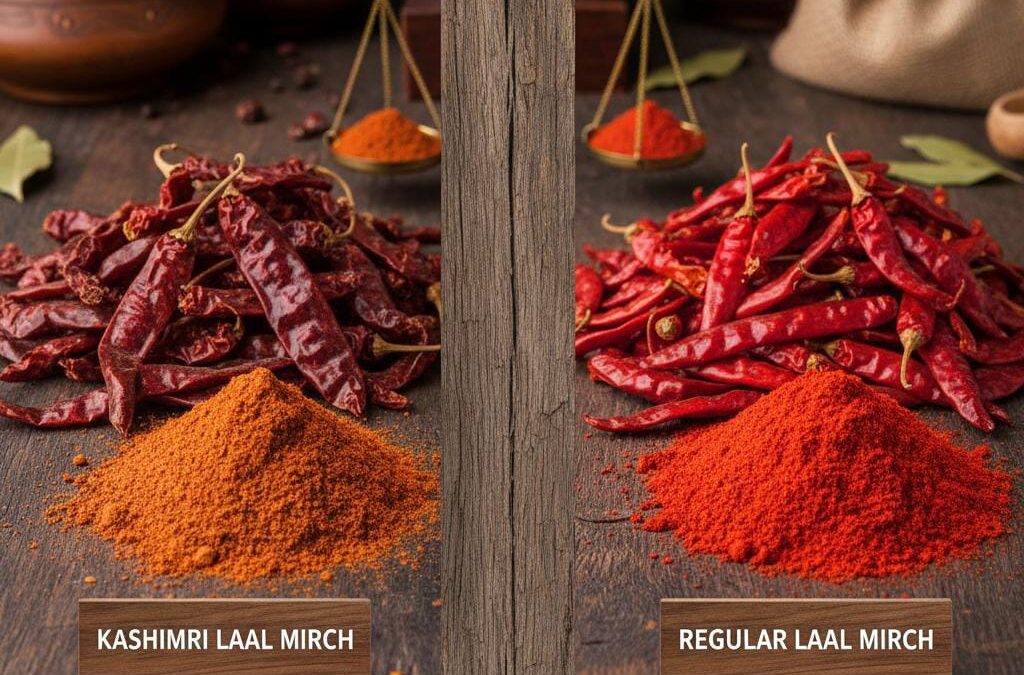
“Kashmiri Red Chili vs Regular Chili Powder: Color Comparison”
Color plays a huge role in how we perceive food. The appearance of a dish affects our expectation and enjoyment before we even taste it.
Kashmiri chili powder is known for its deep red hue, which adds a beautiful vibrant touch to any dish. This vibrant color comes from natural pigments in the chilies. No artificial coloring is needed when using quality Kashmiri powder.
Regular chili powder tends to have a darker shade of red or even a brownish color. While still red, it lacks the brightness of Kashmiri powder. The color is more muted and less visually striking.
Restaurant presentation benefits enormously from Kashmiri chili. You’ll often find Kashmiri chili powder used in Indian cooking for its ability to add color without torching your taste buds. The rich red color makes dishes look more appealing and professional.
Some restaurants try to simulate the color of Kashmiri Laal Mirch by adding artificial food colors, which does more harm than good. This practice shows how valuable the natural color is. However, using authentic Kashmiri powder is always the better choice.
The color intensity affects how much powder you need. With regular chili powder, you might hesitate to add enough for good color because of heat concerns. Kashmiri powder lets you add as much as needed for perfect color without worrying about excessive spiciness. The kashmiri red chili vs regular chili powder heat difference is the
most noticeable distinction.
Photography and food styling professionals prefer dishes made with Kashmiri chili. The vibrant red photographs beautifully. Social media posts featuring these dishes get more engagement because they look more appetizing.
Color also serves as a quality indicator. Authentic and best Kashmiri chili powder should lend more color and less heat. If your Kashmiri powder looks dull or provides more heat than color, it might not be genuine. Color separates kashmiri red chili vs regular chili powder more than
any other factor.
Kashmiri Red Chili vs Regular Chili Powder Flavor Profiles”
Beyond heat and color, these powders offer distinct flavor experiences. Understanding these nuances helps you choose the right one for specific dishes.
Kashmiri chili powder offers a unique blend of smoky, earthy, and slightly fruity notes. This complexity comes from the specific growing conditions in Kashmir. The cool mountain climate affects the chili’s chemical composition. The kashmiri red chili vs regular chili powder flavor debate centers on complexity versus straightforward heat.
Kashmiri red chilies are unique in their flavor profile, offering a balance between spiciness and a subtle sweetness. This sweetness surprises many first-time users. It adds depth without tasting obviously sweet like sugar would.
Regular chili powder provides a straightforward and intense spicy flavor. There is less complexity here. The flavor is direct and one-dimensional. It tastes primarily of heat with some earthy undertones.
The fruity notes in Kashmiri chili work particularly well with tomato-based gravies. The flavors complement each other naturally. This is why so many curry recipes specifically call for Kashmiri powder.
Regular chili powder pairs better with robust, heavily spiced dishes. When you have many competing flavors, the straightforward heat cuts through. It provides the spice kick without adding competing flavor notes.
Freshness dramatically affects flavor in both powders. Fresh regular chili powder tastes sharp and pungent. Old powder loses heat and develops a dusty flavor. Fresh Kashmiri powder smells sweet and fruity. Stale Kashmiri powder loses its distinctive aroma.
The oil content in chilies contributes to flavor. Kashmiri chilies contain aromatic oils that create their signature taste. Regular hot chilies have different oil compositions focused more on capsaicin than aromatic compounds.
Regional Varieties and Sources
Understanding where these chilies come from helps appreciate their differences. Geography and growing conditions significantly impact the final product.
As per the Spice Board of India (Official Government Source) URL: https://www.indianspiceboard.gov.in/ Kashmiri chilies are grown in Himachal Pradesh and the Jammu and Kashmir regions. The high altitude and cool climate create unique growing conditions. These conditions produce chilies with specific characteristics.
However, a common misconception exists about Kashmiri chilies. Many products labeled as Kashmiri chili actually come from other regions. The Byadgi chili from Karnataka closely resembles Kashmiri chili in appearance and properties. Some manufacturers use Byadgi chilies and label them as Kashmiri.
Authentic Kashmiri chilies command premium prices. The limited growing area and high demand create scarcity. This economic reality leads to substitution and mislabeling. Knowing this helps you make informed purchasing decisions.
Regular red chili powder can come from anywhere in India. Guntur in Andhra Pradesh is famous for extremely hot chilies. These chilies are exported worldwide and used in many commercial chili powders. Byadgi chilies from Karnataka also appear in regular chili powder blends.
Each region’s soil composition affects the chili’s properties. Mineral content, water availability, and climate all play roles. This is why chilies from different areas taste different even when they are the same variety.
Climate change is affecting chili cultivation. Traditional growing regions face new challenges. Some farmers are adapting by trying new varieties or moving to different altitudes. These changes may affect future availability and quality. The kashmiri red chili vs regular chili powder flavor comparison reveals surprising complexity.
Organic farming practices are becoming more common. Some brands now offer organic versions of both Kashmiri and regular chili powder. These products appeal to health-conscious consumers willing to pay premium prices.
When to Use Regular Chili Powder in Kashmiri Red Chili vs Regular Chili Powder Choice”
Regular red chili powder shines in specific cooking applications. Knowing when to use it maximizes its benefits.
Dishes that require serious heat benefit most from regular chili powder. Spicy curries like vindaloo or Andhra chicken thrive on its intensity. These recipes are meant to be fiery. Regular chili powder delivers exactly that. Knowing when to choose between kashmiri red chili vs regular chili powder transforms your cooking results.
Tempering or tadka is a perfect application for regular chili powder. Adding it to hot oil releases its pungent aroma. The oil carries the heat and flavor throughout the dish. This technique works especially well for dal and vegetables.
Dry spice rubs for grilling use regular chili powder effectively. The heat penetrates the meat during cooking. The powder creates a spicy crust that many people love. Adjust the amount based on your heat tolerance. This kashmiri red chili vs regular chili powder distinction matters in
everyday cooking.
Understanding kashmiri red chili vs regular chili powder properties helps
you make informed choices.The kashmiri red chili vs regular chili powder debate affects recipe outcomes
significantly.Many cooks ask about kashmiri red chili vs regular chili powder when starting
their Indian cooking journey.
Pickles and preserves often contain regular chili powder. The heat acts as a natural preservative. It also adds the spicy kick that makes pickles addictive. Traditional Indian pickle recipes rely on potent chili powder.
Spice blends like sambar powder and rasam powder include regular chili powder. These blends are meant to be spicy. The chili powder provides the heat component while other spices add complexity.
Street food applications favor regular chili powder. Chaat items, bhel puri, and similar snacks need that spicy punch. The powder adds excitement without changing the dish’s texture or appearance significantly.
When cooking for spice lovers, regular chili powder is essential. Some people genuinely enjoy intense heat. For them, mild spices taste bland. Regular chili powder satisfies this preference.
Best Uses for Kashmiri Red Chili
Kashmiri red chili powder excels in completely different situations. Its unique properties make it irreplaceable in certain dishes.
Indian curries like butter chicken or rogan josh get their gorgeous red glow from Kashmiri chili powder. The vibrant color makes these dishes restaurant-worthy. The mild heat lets the cream and tomato flavors shine through.
Tandoori preparations use Kashmiri chili mixed into marinades for that signature reddish tint. The powder colors the meat beautifully without adding overwhelming heat. This creates the classic tandoori appearance everyone recognizes.
Garnishing items like chaats, raita, or roasted vegetables benefits from a sprinkle of Kashmiri chili powder. The powder adds visual appeal and a gentle flavor boost. It makes even simple dishes look more elaborate.
Tempering with Kashmiri chili in ghee or oil releases its smoky aroma, perfect for dals or gravies. The powder blooms in hot fat, infusing its color and flavor throughout. This technique works particularly well with lentil dishes.
Biryani and pulao benefit from Kashmiri chili powder. The rice turns a beautiful golden-red color. The flavor remains subtle enough not to compete with the aromatic spices in these dishes.
Paneer dishes use Kashmiri chili extensively. Paneer tikka, paneer butter masala, and kadai paneer all rely on it. The mild heat works perfectly with the delicate paneer flavor.
Tomato-based gravies are ideal for Kashmiri chili. The powder enhances the tomato’s natural red color. It adds depth without making the gravy too spicy. Many North Indian curry recipes specifically call for it.
Kashmiri Red Chili vs Regular Chili Powder Substitution Guide”
Sometimes you only have one powder but a recipe calls for the other. Understanding substitution helps you adapt recipes successfully.
Substituting regular chili powder for Kashmiri requires careful adjustment. Use about one-third the amount the recipe calls for. Regular powder is much hotter, so less goes a long way. You might lose some color but will maintain heat.
To replace Kashmiri with regular chili powder for color, consider mixing regular powder with paprika. Paprika provides color without heat. Mix two parts paprika with one part regular chili powder. This approximates Kashmiri’s color and mild heat.
Cayenne pepper is much hotter than Kashmiri chili, so using it as a direct substitute can make the dish excessively spicy. Start with one-third the amount and adjust carefully. Remember that cayenne lacks Kashmiri’s distinctive flavor profile.
When substituting, consider the dish’s purpose. If color matters more than heat, paprika or sweet pepper powder works better than regular chili powder. If heat is essential, regular chili powder makes more sense than Kashmiri.
Deggi mirch serves as a middle ground option. It is slightly spicier than Kashmiri chili but milder than standard chili powder. This makes it a useful compromise when you need both color and moderate heat.
Byadgi chili powder closely resembles Kashmiri powder. Byadgi chilies are deep red in color, similar to Kashmiri chili. If you can find Byadgi powder, it substitutes almost perfectly for Kashmiri.
Keep both powders in your pantry whenever possible. They serve different purposes and are not truly interchangeable. Having both options gives you maximum flexibility in cooking.
Buying Guide and Quality Indicators
Purchasing quality chili powder requires knowledge. Many products on shelves are not what they claim to be.
Look for powder that lists only one ingredient: ground chilies. Additives like salt, oil, or anti-caking agents indicate lower quality. Pure powder should contain nothing but dried, ground chilies.
Color tells you a lot about quality. Fresh Kashmiri powder should be bright, vibrant red. Dull or brownish powder is either old or adulterated. Regular chili powder should be bright orange-red, not brown.
Smell the powder if possible before buying. Quality chili powder smells pungent and fresh. Musty or weak aromas indicate stale product. The smell should be strong enough to make your nose tingle slightly.
Check packaging dates when available. Chili powder loses potency over time. Buy the freshest product possible. Smaller quantities used quickly beat large amounts that sit for months.
Brand reputation matters significantly. Established brands like Awasthi Masale maintain consistent quality. They source their chilies carefully and process them properly. This ensures you get what you pay for.
Price can indicate quality but not always. Extremely cheap chili powder often contains additives or inferior chilies. However, the most expensive option is not automatically the best. Research brands and read reviews.
Specialty stores often carry better quality than supermarkets. Indian grocery stores typically stock authentic products. The staff can often recommend specific brands. Online specialty spice retailers also offer premium options.
Storage Tips for Maximum Freshness
Proper storage extends your chili powder’s lifespan significantly. These spices lose quality quickly when stored incorrectly.
Keep chili powder in airtight containers. Glass jars with rubber seals work best. Plastic containers can work but may absorb odors over time. Metal tins are acceptable if they seal tightly.
Store containers in a cool, dark, dry place. Heat, light, and moisture are the enemies of spice freshness. A dedicated spice cabinet away from the stove is ideal. Never store spices above the stove where heat and steam affect them.
Avoid clear containers stored in light areas. Light degrades the color and flavor of chili powder. If you use clear jars, keep them in a dark cabinet. Opaque containers are even better.
Never shake spices directly over steaming pots. The steam enters the container and introduces moisture. This causes clumping and eventually mold. Always use a dry spoon to remove powder.
Label containers with purchase dates. This helps you track freshness. Replace regular chili powder every six months. Kashmiri powder lasts slightly longer but should still be replaced within a year.
Buy in quantities you will use within a few months. Large containers seem economical but lose value if the spice goes stale. Smaller, fresher purchases serve you better.
Freeze chili powder for long-term storage. This controversial method works if done properly. Use airtight, moisture-proof containers. Let them come to room temperature before opening to prevent condensation.
Common Mistakes to Avoid
Many home cooks make predictable errors with these spices. Learning from others’ mistakes saves you from ruining dishes.
Using too much Kashmiri chili powder thinking it is like regular powder causes problems. While it is mild, excessive amounts still create heat. More importantly, too much can make dishes taste muddy. Use recommended amounts as starting points.
Assuming all red chili powder is the same leads to inconsistent results. The difference between Kashmiri and regular is significant. Recipes that specify one type usually do so for good reason. Substituting blindly often disappoints.
Burning chili powder during tempering ruins its flavor. Both powders burn easily in hot oil. Add them carefully and stir constantly. Remove the pan from heat if they start turning black.
Not adjusting for brand differences causes surprises. Some brands are much hotter than others. Always test a new brand before using it in important dishes. Start with less than the recipe calls for.
Storing opened packages without transferring to proper containers wastes money. Original packaging rarely seals well after opening. Transfer to airtight containers immediately after opening.
Buying old stock from stores with slow turnover means starting with stale product. Check expiration dates before purchasing. Choose stores that clearly rotate stock regularly.
Expecting Kashmiri powder to provide heat like regular powder disappoints. Know what each spice does best. Use them according to their strengths rather than forcing them into unsuitable roles.
Health Benefits and Nutritional Value
Beyond flavor, both types of chili powder offer health benefits. Understanding these advantages adds another reason to use them.
Capsaicin, the compound that makes chilies hot, has several health benefits. It may boost metabolism and help with weight management. Some studies suggest it reduces inflammation in the body.
Regular chili powder contains more capsaicin than Kashmiri powder. This means it potentially offers more of capsaicin’s benefits. However, the heat might limit how much people can comfortably consume.
Both powders contain vitamins A and C. These antioxidants support immune function and skin health. The bright red color comes partly from carotenoids, which convert to vitamin A in your body.
Chili peppers contain minerals like potassium and iron. These support various bodily functions. While the amounts in a typical serving are small, they contribute to overall nutrition.
Some research suggests chili consumption may support heart health. Compounds in chilies might help reduce bad cholesterol and improve circulation. However, more research is needed to confirm these effects.
Traditional medicine systems like Ayurveda use chilies for digestive health. They believe moderate amounts stimulate digestion. Excessive amounts can irritate the digestive system though.
People with certain conditions should exercise caution with spicy foods. Acid reflux, ulcers, and irritable bowel syndrome may worsen with excessive chili consumption. Moderation is key for everyone.
Cooking Techniques for Best Results
Proper cooking techniques maximize the benefits of both powders. These methods ensure you get optimal flavor and color.
Blooming chili powder in hot oil releases its full flavor. Heat oil over medium heat. Add the powder and stir constantly for 15 to 30 seconds. Watch carefully to prevent burning. This technique intensifies both flavor and color.
Adding powder at different cooking stages creates depth. Use some at the beginning for base flavor. Add more toward the end for brightness. This layering technique creates complexity that single additions cannot achieve.
Mixing powder with water or yogurt before adding prevents clumping. This also helps distribute the spice evenly throughout the dish. The slurry mixes more easily than dry powder.
Adjusting quantity based on cooking time matters. Long-cooked dishes need more powder initially because flavor mellows over time. Quick-cooked dishes need less because the flavor stays sharp.
Balancing chili powder with cooling ingredients creates harmony. Yogurt, cream, and coconut milk all temper spice. They let you use more powder for color and flavor without excessive heat.
Testing dishes as you cook helps you adjust. Taste frequently and add powder gradually. You can always add more but removing excess is impossible.
Consider how other spices interact with chili powder. Cumin, coriander, and turmeric all pair well. They create balanced profiles where no single spice dominates.
Brand Recommendations for Kashmiri Red Chili vs Regular Chili Powder and Where to Buy
Finding quality products requires knowing where to look. Some brands consistently deliver better results than others.
Awasthi Masale offers both Kashmiri and regular red chili powder of excellent quality. Their commitment to purity ensures you get authentic products. The powders maintain consistent quality across batches.
Local Indian grocery stores stock multiple brands. Ask staff for recommendations based on your needs. They often have personal experience with different products. Many stores offer sample sizes for testing.
Online retailers provide convenience and variety. Sites specializing in Indian groceries carry premium brands. Read customer reviews before purchasing. Look for comments about authenticity, freshness, and heat level.
Farmer’s markets sometimes have vendors selling fresh-ground spices. These products offer maximum freshness. The vendors can often tell you exactly where the chilies came from.
Specialty spice shops curate their selection carefully. They typically stock higher-quality products than supermarkets. Staff knowledge helps you make informed choices.
Avoid generic supermarket brands when possible. These often contain additives or lower-quality chilies. The slight price savings do not justify the quality difference.
Consider buying whole dried chilies and grinding them yourself. This ensures maximum freshness. It requires more effort but delivers superior flavor. A coffee grinder dedicated to spices works perfectly.
Recipe Ideas Showcasing Each Powder : Kashmiri Red Chili vs Regular Chili Powder
Practical recipe suggestions help you understand when to use each powder. These examples demonstrate their different applications.
For Kashmiri red chili powder, try making butter chicken. The powder gives the gravy its signature red color. The mild heat lets the cream and tomato shine. Use three tablespoons for four servings.
Rogan josh showcases Kashmiri powder beautifully. The Kashmiri dish traditionally uses local chilies. The resulting curry is vibrant red without being painfully spicy. The flavor is complex and warming.
Tandoori chicken marinade benefits from Kashmiri powder. Mix it with yogurt, ginger, garlic, and garam masala. The chicken develops that classic red color. The heat remains manageable for most palates.
Regular red chili powder works perfectly in spicy chicken curry. Use it when you want intense heat. Start with half a teaspoon per serving and adjust up. The heat builds as the curry simmers.
Spicy lentil soup uses regular chili powder effectively. The heat complements the earthy lentils. It creates a warming, satisfying dish. Add powder during the tadka for maximum impact.
Aloo gobi can use either powder depending on preference. Kashmiri powder makes it colorful and mildly spiced. Regular powder makes it more traditional and spicier. Try both versions to see which you prefer.
Paneer tikka absolutely needs Kashmiri powder. The cheese absorbs the color beautifully. The mild heat does not overwhelm the delicate paneer. This is one recipe where substitution really shows.
Conclusion
The kashmiri red chili vs regular chili powder comparison reveals fundamental
differences. This kashmiri red chili vs regular chili powder guide shows they
serve distinct purposes. Mastering kashmiri red chili vs regular chili powder
selection elevates your cooking. Remember the kashmiri red chili vs regular
chili powder rules: Kashmiri for color, regular for heat.
Your journey to mastering Indian spices starts with understanding these fundamental differences. Apply this knowledge in your kitchen and watch your dishes improve dramatically. The kashmiri red chili vs regular chili powder comparison reveals two distinct spices with unique purposes. Understanding this difference elevates your cooking from amateur to professional level
Can I use regular chili powder instead of Kashmiri?
Yes, but use one-third the amount and expect less color. Mix with paprika to approximate Kashmiri’s properties. The flavor will differ slightly.
Is Kashmiri chili powder spicy?
Kashmiri powder is mild, rating 1,000-2,000 SHU. Most people find it comfortable. It provides color and flavor without intense heat.
Why is Kashmiri chili powder so red?
The specific variety and growing conditions create high pigment content. Natural compounds produce the vibrant color without artificial additives.
Which is healthier: Kashmiri or regular?
Both offer similar health benefits. Regular powder has more capsaicin. Kashmiri has equivalent vitamins and antioxidants. Choose based on your heat preference.
Why do restaurants use Kashmiri chili powder?
The vibrant color makes dishes photogenic and appealing. The mild heat pleases most customers. It is essential for authentic North Indian recipes.
Where can I buy authentic Kashmiri chili powder?
Indian grocery stores, specialty spice shops, and online retailers carry it. Look for reputable brands like Awasthi Masale for authenticity.
What is the main difference in kashmiri red chili vs regular chili powder?
The primary difference is heat and color. Kashmiri provides vibrant red color with mild heat (1,000-2,000 SHU), while regular chili powder delivers intense spiciness with less color.
Can I use regular chili instead of Kashmiri in kashmiri red chili vs regular chili powder recipes?
When comparing kashmiri red chili vs regular chili powder for substitution, use one-third the amount of regular powder
Why do chefs prefer kashmiri red chili vs regular chili powder?
The kashmiri red chili vs regular chili powder choice depends on desired heat and color balance.
Is kashmiri red chili vs regular chili powder heat level significant?
Yes, the kashmiri red chili vs regular chili powder heat difference is dramatic: 1,000-2,000 SHU versus 30,000-50,000 SHU.
Experience Authentic Indian Spices Today
Discover the difference between Kashmiri chili vs regular chili powder quality makes in your cooking. Awasthi Masale offers both authentic Kashmiri red chili powder and premium regular red chili powder. Our products deliver consistent color, flavor, and heat every time. Shop our complete spice collection and transform your kitchen into a culinary masterpiece. Visit http://awasthimasale.com